
.png)
TL;DR
- The UAE AI Act 2026 (effective March 2026) introduces a four-tier, risk-based framework — all businesses deploying AI must self-assess within six months of the effective date.
- Tier 3 (High Risk) businesses face the most demanding obligations: annual third-party algorithm audits, quarterly bias testing, a board-reporting AI Ethics Officer, and 72-hour incident notification.
- The UAE AI Authority can impose penalties of up to AED 10 million for non-compliance. (Source: UAE AI Authority, 2026)
- If your organisation uses AI for credit scoring, hiring, medical diagnostics, or automated decisions affecting individuals, you are almost certainly classified as Tier 3.
- If you haven't mapped your AI systems to the Act's risk tiers, start your self-assessment now — the deadline is September 2026.
The UAE AI Act came into effect in March 2026, establishing the country's first comprehensive national AI legislation and giving every business deploying AI systems a six-month window to complete a mandatory self-assessment and determine their risk tier. For regulated businesses operating in financial services, healthcare, and critical infrastructure, the window is already closing — and the obligations for those classified as Tier 3 (High Risk) are substantial.
Who this is for: Chief Information Security Officers (CISOs), compliance officers, and risk managers in UAE-regulated industries who need to understand what the Act requires and how to operationalise compliance before the September 2026 self-assessment deadline.
Why the UAE AI Act 2026 matters right now
The UAE has consistently led the Middle East in AI regulatory maturity, scoring 36 out of 50 in a 2026 assessment of 14 regional countries — the highest in the region. (Source: VerifyWise AI Regulation Middle East Report, 2026) The UAE AI Act is the next logical step in that trajectory: it moves the country from voluntary guidelines and sector-specific frameworks to binding, enforceable obligations with meaningful penalties.
For compliance leaders, the timing is deliberate. The UAE National AI Strategy 2031 has accelerated AI adoption across government, financial services, and healthcare faster than most governance frameworks could keep pace with. The Act closes that gap by requiring organisations to formalise what many have been doing informally — or not doing at all.
The self-assessment requirement, with a September 2026 deadline, is the immediate pressure point. It forces every business deploying AI to have a documented answer to a question that many have avoided: which risk tier does our AI use fall into, and are we ready to meet the obligations that come with it?
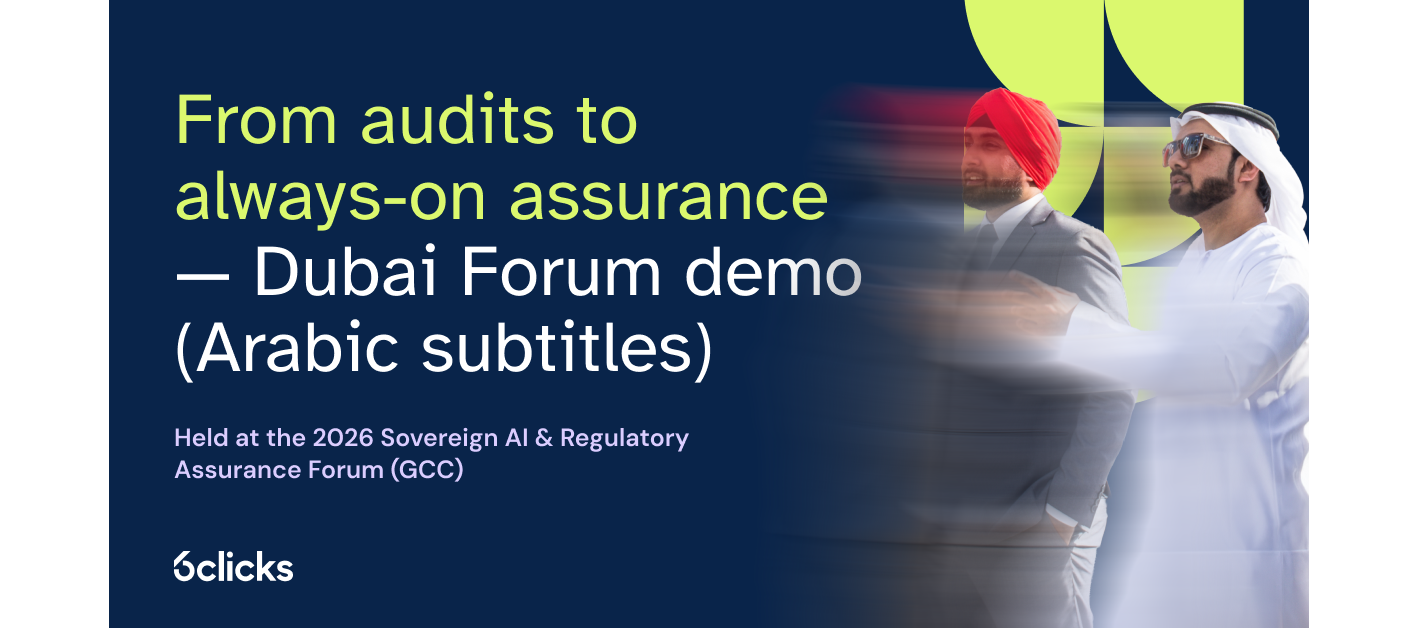
Want a practical walkthrough of always-on assurance in action? Watch the on-demand webinar (Arabic subtitles): From audits to always-on assurance - Dubai Forum demo
What are the four tiers under the UAE AI Act?
The Act mirrors the risk-based structure of the EU AI Act but is calibrated to UAE priorities, including smart city infrastructure, financial services, and healthcare.
Tier 1: Minimal risk
Covers spam filters, basic chatbots, and content recommendation systems. The only requirement is a transparency notice informing users they are interacting with an AI system.
Tier 2: Limited risk
Covers customer service AI, predictive analytics, and automated content generation. Organisations must register their systems and submit annual reporting to the UAE AI Authority.
Tier 3: High risk
Covers credit scoring algorithms, hiring and recruitment AI, medical diagnostics, and autonomous vehicles. This is the tier with the most stringent compliance requirements (detailed below) and the one most likely to apply to regulated businesses in financial services and healthcare.
Tier 4: Critical risk
Covers real-time biometric identification, social scoring systems, and critical infrastructure control. Organisations must obtain pre-deployment approval from the UAE AI Authority, maintain continuous monitoring, and ensure mandatory human-in-the-loop controls at all times.
What does Tier 3 (High Risk) compliance actually require?
For regulated businesses, Tier 3 classification triggers the most operationally demanding set of obligations under the Act. Each requirement has a direct governance implication.
Annual third-party algorithm audits
Every Tier 3 AI system must be audited annually by an accredited auditor recognised by the UAE AI Authority. This is not an internal review — it requires an independent, documented assessment of how the algorithm operates, what data it uses, and whether its outputs are fair and explainable. Organisations that cannot produce model documentation, training data records, and audit trails will fail this requirement.
Quarterly bias testing with public disclosure
Tier 3 systems must be tested for demographic bias every quarter, and the results must be publicly disclosed. This creates a recurring operational obligation that sits outside most existing compliance calendars. For financial services organisations, where credit scoring and lending decisions are common Tier 3 use cases, this requirement aligns with existing Central Bank of the UAE (CBUAE) expectations around fair treatment and explainability — but adds a formal, time-bound cadence and a disclosure requirement that did not previously exist.
Designated AI Ethics Officer with board reporting
Every organisation operating a Tier 3 AI system must appoint an AI Ethics Officer with a direct reporting line to the board. This is a governance structure requirement, not a technical one. It reflects the Act's core principle that AI accountability must sit at the executive level. For organisations without an existing AI governance function, this creates both a role definition and a reporting architecture to build from scratch.
72-hour incident notification
Any AI-related incident — including unexpected outputs, system failures, or bias events — must be reported to the UAE AI Authority within 72 hours. This mirrors the incident notification obligations that regulated businesses already manage under data protection law, but extends it to AI system events specifically. Organisations need documented incident response plans that cover AI events, not just cybersecurity incidents.
Comprehensive model documentation
Tier 3 systems must be accompanied by model cards and training data documentation. These documents describe what the model does, what data it was trained on, its known limitations, and how it should and should not be used. For organisations that have deployed third-party AI models, this means obtaining and maintaining documentation from vendors — not just assuming the vendor handles compliance on your behalf.
Right to explanation
Individuals affected by automated decisions from a Tier 3 AI system have a right to an explanation of how that decision was reached. This requires the AI system to be sufficiently explainable — not just accurate — and for the organisation to have a process for responding to explanation requests in a timely and meaningful way.
What does the self-assessment process involve?
All businesses deploying AI in the UAE must complete a self-assessment within six months of the Act's effective date (March 2026) to determine their risk tier. The self-assessment is not a checkbox exercise — it requires a documented inventory of every AI system in use, a risk classification for each system, and an assessment of current compliance against the obligations for that tier.
For most regulated businesses, the self-assessment will surface three things:
- AI systems they didn't realise were in scope — third-party tools and embedded AI features in existing software platforms are often overlooked
- Governance gaps — missing documentation, absent oversight structures, or undefined incident response processes
- Vendor obligations — AI governance requirements that need to be flowed down to third-party AI suppliers through contracts and due diligence processes
Organisations that treat the self-assessment as a one-time exercise will find themselves underprepared for the annual audit cycle that follows. The self-assessment is the starting point for an ongoing AI governance programme, not a one-off compliance task.
How 6clicks helps regulated businesses comply with the UAE AI Act 2026
The UAE AI Act's requirements map directly to the capabilities within the 6clicks platform — built specifically for regulated industries managing complex, multi-framework compliance obligations.
-
AI risk assessment and tier classification: 6clicks includes pre-built templates aligned to risk-based AI frameworks, including ISO/IEC 42001 (the international AI management system standard adopted by the UAE) and the NIST AI Risk Management Framework (RMF). These can be adapted to support the Act's self-assessment process, giving compliance teams a structured, auditable approach to tier classification.
-
Control mapping and documentation: 6clicks' Content Library includes pre-built control sets that can be mapped to the UAE AI Act's Tier 3 obligations — algorithm audit requirements, bias testing protocols, model documentation standards, and incident notification processes. This reduces the manual effort of building a compliance programme from the ground up.
-
Audit trails and evidence management: Every control assessment, policy acknowledgement, and incident record in 6clicks is timestamped and auditable — giving organisations the documentation backbone required for annual third-party algorithm audits.
-
Vendor Risk Management: 6clicks' Vendor Risk Management capability supports AI-specific due diligence questionnaires and continuous monitoring for third-party AI suppliers — critical for organisations whose Tier 3 obligations extend to vendor-provided AI systems.
-
Hub & Spoke for multi-entity governance: For UAE-headquartered organisations operating across multiple entities or jurisdictions, 6clicks' Hub & Spoke architecture enables centralised AI governance with entity-level visibility — without duplicating effort across every subsidiary or business unit.
Hailey, 6clicks' AI engine, supports automated control mapping across frameworks, helping compliance teams identify gaps between their current state and UAE AI Act obligations quickly.
Want a practical walkthrough of always-on assurance in action? Watch the on-demand webinar (Arabic subtitles): From audits to always-on assurance - Dubai Forum demo
Frequently asked questions
What is the UAE AI Act 2026 and when does it apply?
The UAE AI Act 2026 came into effect in March 2026. It is the UAE's first comprehensive national AI legislation, establishing a four-tier, risk-based framework for all businesses deploying AI systems in the country. All businesses must complete a self-assessment to determine their risk tier within six months of the effective date — meaning the deadline is September 2026.
How do I know if my organisation is classified as Tier 3 (High Risk)?
Tier 3 applies to AI systems used in credit scoring, hiring and recruitment decisions, medical diagnostics, and autonomous vehicles. If your organisation uses AI to make or support decisions that directly affect individuals — particularly in financial services or healthcare — it is likely classified as Tier 3. The mandatory self-assessment process is the formal mechanism for determining your classification.
What is an AI Ethics Officer under the UAE AI Act?
Organisations operating Tier 3 AI systems must appoint a designated AI Ethics Officer with a direct reporting line to the board. This role is responsible for overseeing AI governance, ensuring ongoing compliance with the Act's obligations, and escalating AI-related incidents or governance failures at the executive level.
What are the penalties for non-compliance with the UAE AI Act 2026?
The UAE AI Authority can impose penalties of up to AED 10 million for non-compliance with the Act. (Source: UAE AI Authority, 2026) Penalties are scaled to the severity of the breach, with the highest penalties reserved for organisations operating Tier 4 (Critical Risk) systems without approval or for repeated failures to meet Tier 3 obligations.
How does the UAE AI Act relate to existing frameworks like CBUAE guidelines and ISO 42001?
The UAE AI Act sits alongside — not in place of — existing sector-specific frameworks. The CBUAE's Guidelines for Financial Institutions Adopting Enabling Technologies already require AI governance, explainability, and risk assessment. The Act formalises and extends those requirements with binding obligations and penalties. ISO/IEC 42001, the international AI management system standard, has been adopted by the UAE and provides a compatible framework for building the governance structures the Act requires.
Start here
If your organisation is deploying AI systems in the UAE and has not yet begun your self-assessment, the September 2026 deadline is your immediate priority. Start by building an inventory of every AI system in use — internal and third-party — then classify each against the Act's four tiers.
Book a demo to see how 6clicks can support your UAE AI Act compliance programme, or download our AI governance guide to start building your self-assessment framework today.