
TL;DR
- EU AI Act obligations for high-risk AI systems apply from August 2026 — preparation time is running out.
- Organisations in restricted, sovereign, hybrid, or on-premises environments face governance gaps that cloud-native tools cannot close.
- This 30-minute webinar on 20 May 2026 covers the practical steps to build defensible AI governance in any environment.
- Attendees will hear directly from practitioners on evidence custody, control mapping, and audit readiness — not theory.
- If your GRC platform cannot reach your environment, this webinar is for you. Register before places close.
The EU AI Act's governance requirements are not optional, and the deadline window for high-risk AI systems is tightening. If your organisation operates in a sovereign, hybrid, on-premises, or air-gapped environment, the standard compliance roadmap does not apply — and most guidance available today does not address your reality.
Who this is for: Compliance officers, risk managers, CISOs, and governance leaders in EU and UK-regulated organisations who are responsible for AI risk and need practical, environment-specific guidance before the EU AI Act obligations take effect.
The EU AI Act deadline is closer than most compliance teams
realise
The EU AI Act's obligations for high-risk AI systems, including requirements for risk management systems, technical documentation, human oversight, and logging, apply from August 2026.
For organisations that have not yet mapped AI deployments, assessed control gaps, or established evidence custody practices, the preparation window is short. For organisations in controlled environments where governance infrastructure cannot simply be bolted on, the challenge is more complex, and the risk of non-compliance is higher.
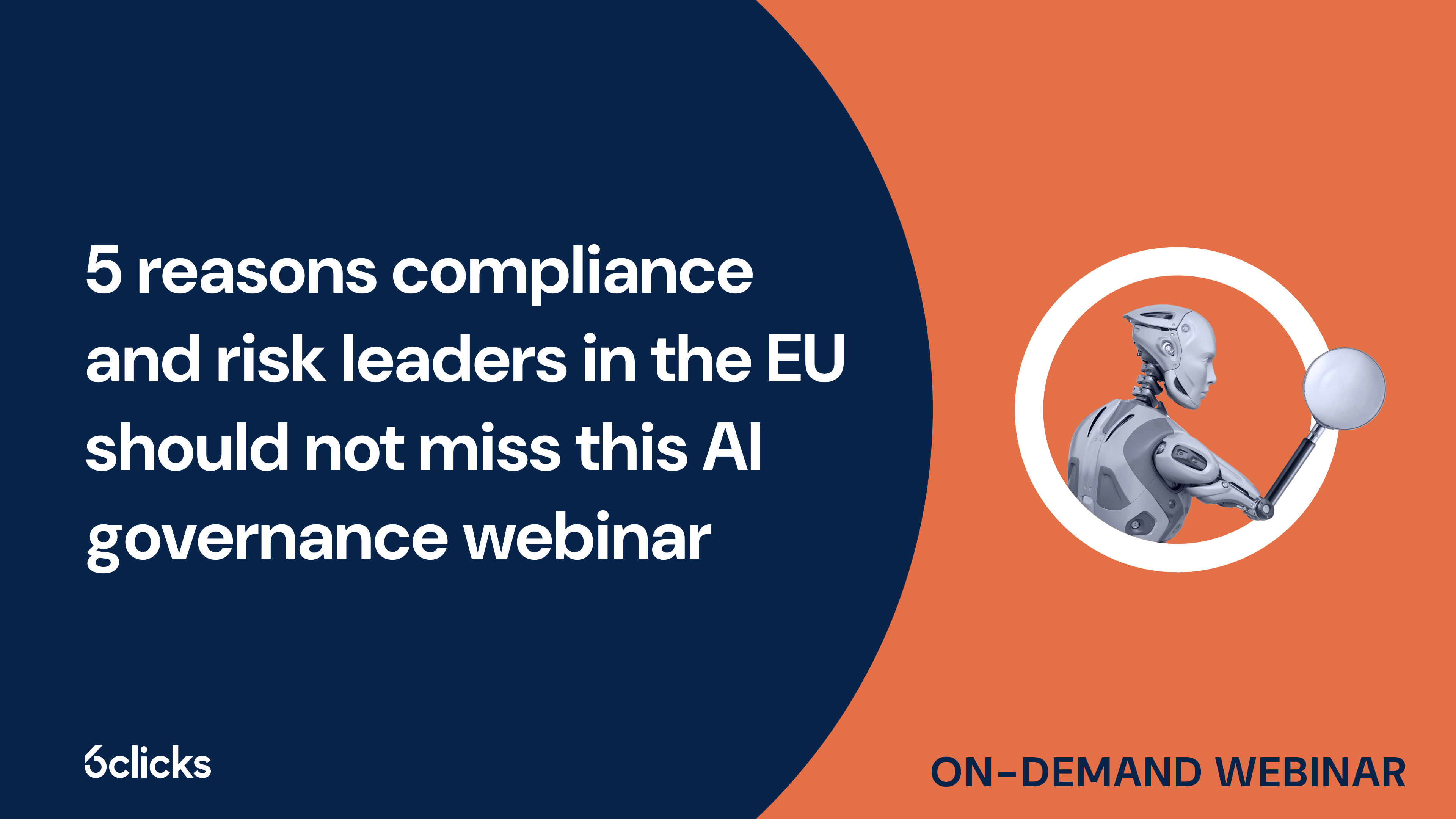
This is not a webinar about what the EU AI Act says. It is about what to do when your environment makes compliance hard.
.png?width=4320&height=4320&name=Europe%20_%20AI%20governance%20in%20controlled%20environments%20(2).png)
5 reasons this webinar is specifically for you
1. Your environment is not what most EU AI Act guidance assumes
The majority of EU AI Act compliance guidance is written for cloud-connected, centralised systems. If your organisation operates AI in sovereign infrastructure, on-premises data centres, OT networks, legacy systems, or partner environments with restricted connectivity, generic guidance leaves critical gaps. This session is built around the reality of restricted and hybrid environments, the governance challenges, the evidence gaps, and the architecture decisions that determine whether you can defend compliance at audit.
2. Evidence custody is the most overlooked EU AI Act risk in
controlled environments
Article 12 of the EU AI Act requires high-risk AI systems to include logging capabilities that enable traceability. In practice, this often relies on automated logging. But in air-gapped or restricted environments, such automation may not be technically feasible with standard tooling. Organisations that cannot demonstrate an unbroken chain of evidence — from model deployment through human oversight decisions — face significant audit exposure. This session will show you how to build defensible evidence custody even when your systems are partially or fully disconnected.
3. You will hear from practitioners, not theorists
Speakers Michael Adisa and I bring direct experience deploying Governance, Risk, and Compliance (GRC) infrastructure into the kinds of environments this session covers: sovereign, hybrid, on-premises, and air-gapped. The session is structured around real governance failure patterns, not compliance frameworks in isolation, and includes a live demonstration of evidence collection, control mapping, and audit-ready reporting across disconnected environments.
4. It is 30 minutes. The risk of not attending is significantly longer
The webinar is intentionally compact: 30 minutes, no filler. Each segment is designed to deliver a specific, actionable output: understanding what the EU AI Act changes in your environment, identifying where your governance currently fails, and understanding the infrastructure decisions that close those gaps. The cost of discovering these gaps at audit — rather than in a 30-minute session — is substantially higher.
5. Qualified attendees receive a follow-up working session at no
cost
Following the webinar, qualified attendees can access a structured GRC Maturity Working Session: a short engagement that maps current constraints, identifies evidence custody gaps, and outlines an actionable governance path for the EU AI Act in your specific environment. This is not a product demonstration. It is a working session with practitioners.
What you will walk away with
- A clear understanding of where EU AI Act governance requirements create specific risks in controlled environments
- A framework for evaluating evidence custody gaps across your AI deployments
- Practical guidance on the infrastructure decisions that determine audit readiness in restricted systems
- Clarity on how sovereign GRC infrastructure closes the gaps that cloud-native tools cannot
How 6clicks supports EU AI Act compliance in controlled
environments
6clicks provides a sovereign GRC infrastructure that deploys on an organisation's terms — across cloud, on-premises, hybrid, and air-gapped environments. Its pre-built content library includes control frameworks aligned to the EU AI Act, ISO 42001 (Artificial Intelligence Management Systems), and NIST AI Risk Management Framework (RMF), enabling rapid gap assessment and audit-ready documentation. Hailey, 6clicks' AI engine, accelerates evidence collection and control mapping without requiring data to leave the organisation's controlled environment.
For EU and UK-regulated organisations managing AI in complex infrastructure, 6clicks closes the governance gap between regulatory expectation and operational reality.
Join our free executive webinar on AI governance in controlled environments: The next compliance challenge
📅 May 20, 2026, Wednesday
🕙 10:00AM to 10:30AM BST
🎟️ Complimentary (priority registration for senior compliance, risk, governance, and security leaders)
Frequently asked questions
Next step
Register now to secure your place.
Priority is given to senior leaders actively addressing AI governance, compliance readiness, or accountability challenges in controlled environments.
Wednesday, 20 May 2026 | 10:00 – 10:30AM BST | Virtual | Complimentary